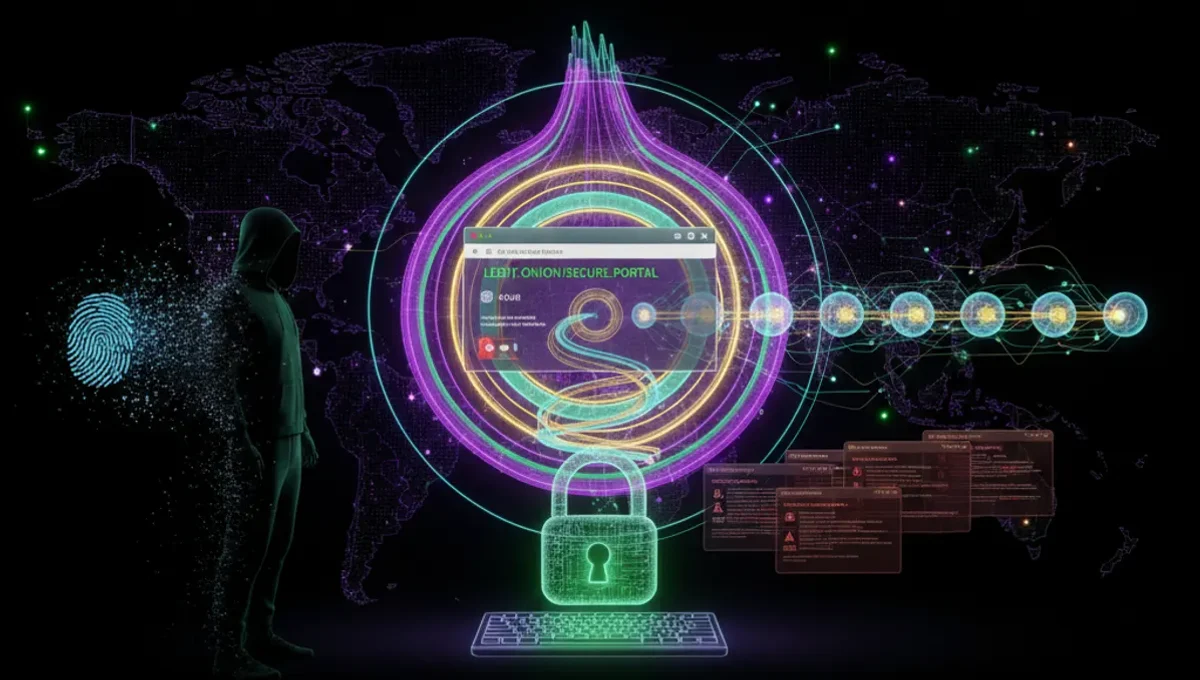
What Makes a Dark Web Site Trustworthy
A trusted dark web site demonstrates several concrete markers. The site operator publishes a PGP public key and signs announcements with it, allowing you to verify that communications come from the legitimate operator. The onion address remains stable over time—legitimate services do not migrate to new addresses without explicit, signed announcements. The site maintains a clear operational history and acknowledges past incidents transparently. Trusted sites also display consistent design and functionality across visits, avoiding sudden layout changes or unexpected redirects. They publish security advisories when vulnerabilities are discovered and provide contact methods for reporting issues. The best dark web sites separate user data from operational infrastructure, use HTTPS within the onion connection, and do not request unnecessary personal information. Legal dark web sites typically document their purpose, terms of service, and any jurisdictional limitations.
How to Verify Onion Addresses and PGP Signatures
Verification begins with obtaining the site's PGP public key from multiple independent channels. If a site publishes its key on a clearnet mirror, a social media account, and within the onion site itself, cross-checking these sources reduces the risk of receiving a fraudulent key. Import the key into a PGP client such as GnuPG. Download the site operator's signed announcement or statement, which should include a detached signature file. Use your PGP client to verify the signature against the public key. A valid signature confirms that the message came from the key holder and has not been altered. For onion addresses, v3 addresses are cryptographically derived from the site's private key, making them harder to forge than older v2 addresses. Document the correct v3 address in a secure location and compare it against any new links before visiting. Legitimate dark web sites often publish their v3 address on clearnet mirrors, official social media accounts, and within the onion site itself. If you encounter an address that differs from these published versions, treat it as a potential phishing clone.
Identifying Phishing Clones and Fraudulent Mirrors
Phishing clones are fake onion sites designed to mimic legitimate services and steal credentials or funds. They typically appear identical to the real site but operate under a different v3 address. To detect clones, always verify the address in your browser's address bar before entering credentials or making transactions. Check the site's official announcements for any warnings about known clones. Legitimate sites often publish lists of fake mirrors they have discovered. Compare the site's SSL certificate details if it uses HTTPS within the onion connection—clones often use self-signed certificates with different issuer information. Examine the site's response time and server behavior; clones may load slowly or display inconsistent content. If a site requests unusual information, displays spelling errors, or has broken functionality, these are red flags. Interesting dark web sites sometimes operate multiple mirrors for redundancy, but these mirrors are always announced through official channels with cryptographic verification. Never assume a site is legitimate based solely on its appearance or recommendations from anonymous sources.
V3 Onion Addresses and Address Stability
V3 onion addresses are 56-character alphanumeric strings derived from the site operator's Ed25519 private key. Unlike older v2 addresses, v3 addresses are cryptographically bound to the site's identity, making it computationally infeasible to forge or hijack them. A v3 address remains constant throughout the site's lifetime unless the operator deliberately retires it and publishes a new one. Legitimate dark web sites do not change v3 addresses without explicit, signed announcements explaining the reason for migration. If you encounter multiple addresses claiming to represent the same service, verify each one independently through official channels before trusting either. The v3 format also includes built-in protections against certain attacks, such as denial-of-service attempts. When bookmarking a site, save the full v3 address and verify it against official sources periodically. Legit dark web sites often display their v3 address prominently on their homepage and in any official documentation. If a site's address changes frequently or if you cannot find a consistent address across multiple official sources, treat it as untrustworthy.
Common Mistakes That Compromise Anonymity and Trust
Users often compromise their security by mixing Tor and non-Tor traffic, such as logging into a clearnet social media account while browsing the dark web through Tor. This linkage allows an observer to correlate your Tor activity with your clearnet identity. Reusing usernames or email addresses across clearnet and darknet services creates the same risk. Visiting the same onion site from multiple devices without proper isolation can allow cross-device tracking if the site uses cookies or browser fingerprinting. Trusting a single directory or recommendation source without verification is a common error; illegal dark web sites often operate directories that promote scams or honeypots. Clicking links from untrusted sources, such as Reddit threads or forum posts, frequently leads to phishing clones. Disabling JavaScript in the Tor browser is recommended for many users, but some sites require it; enabling JavaScript selectively for specific sites can leak your real IP address if the site is malicious. Failing to update the Tor browser leaves you vulnerable to known exploits. Storing credentials or sensitive data in plaintext on your device defeats the purpose of using the dark web. Always assume that any site could be compromised or fraudulent until you have verified it through multiple independent channels.
Comparing Tor, VPN, and I2P for Darknet Access
Tor routes traffic through multiple relays operated by volunteers, making it difficult for any single observer to correlate your traffic with your identity. Exit nodes can theoretically inspect unencrypted traffic, but onion services use end-to-end encryption that bypasses exit nodes entirely. Tor is designed for anonymity and is the standard for accessing onion sites. VPNs encrypt traffic between your device and a VPN provider's server, but the provider can see your traffic and knows your real IP address. VPNs do not provide anonymity equivalent to Tor; they shift trust from your ISP to the VPN provider. I2P is a separate anonymity network designed for internal communication rather than accessing external sites. I2P uses a different routing protocol and is less suitable for accessing the broader internet. For accessing trusted dark web sites and onion services, Tor is the appropriate choice. VPNs can be used in combination with Tor for additional privacy, but this adds complexity and may not provide additional security benefits. I2P is useful for specific applications within the I2P network but does not provide access to onion sites. Each network has different threat models and use cases; choose based on your specific requirements.
Legal and Illegal Uses of the Dark Web
Legal dark web sites include privacy-focused email services, news outlets that publish leaked documents, forums for discussing censorship and surveillance, libraries of academic papers, and communication platforms for journalists and activists. Many countries restrict access to information or communications; the dark web provides a channel for accessing unrestricted information and organizing political activity. Whistleblowing platforms accept anonymous submissions of sensitive documents. Cryptocurrency services operate on the dark web for privacy reasons. Illegal dark web sites include marketplaces for drugs, weapons, and stolen data, as well as services facilitating fraud, hacking, or extortion. Law enforcement agencies monitor illegal dark web sites and have successfully prosecuted operators and users. The legality of accessing a particular site depends on your jurisdiction and the site's content. Simply accessing the dark web is legal in most countries, but accessing specific illegal content or services is not. Users should understand the legal implications of their activities in their jurisdiction. This guide provides technical information only and does not endorse illegal activities.
Frequently asked questions
How do I know if a dark web site is legitimate?
Verify the site's v3 onion address against multiple official sources, check for PGP signatures on announcements, and look for consistent design and functionality across visits. Legitimate sites maintain stable addresses, publish security information transparently, and do not request unnecessary personal data. Cross-reference information across independent channels before trusting a site.
What is a v3 onion address and why does it matter?
A v3 onion address is a 56-character identifier cryptographically derived from the site operator's private key. V3 addresses are more secure than older v2 addresses because they cannot be forged or hijacked. A legitimate site's v3 address remains constant unless the operator publishes a signed announcement explaining a migration to a new address.
How can I detect a phishing clone of a dark web site?
Check the v3 address in your browser's address bar against the site's official announcements. Phishing clones use different addresses. Look for spelling errors, broken functionality, or unusual requests for information. Verify SSL certificate details if the site uses HTTPS. Legitimate sites often publish lists of known clones on their official channels.
Is it legal to access the dark web?
Accessing the dark web itself is legal in most countries. However, accessing specific illegal content or services is not. The legality depends on your jurisdiction and the site's content. Legal dark web sites include privacy-focused services, news outlets, and communication platforms. Users should understand the legal implications of their activities.
Should I use a VPN with Tor to access dark web sites?
Using a VPN with Tor adds complexity and may not provide additional security benefits for accessing onion sites. Tor already provides strong anonymity for onion traffic. A VPN shifts trust from your ISP to the VPN provider, who can see your traffic and knows your real IP address. For onion sites, Tor alone is typically sufficient.