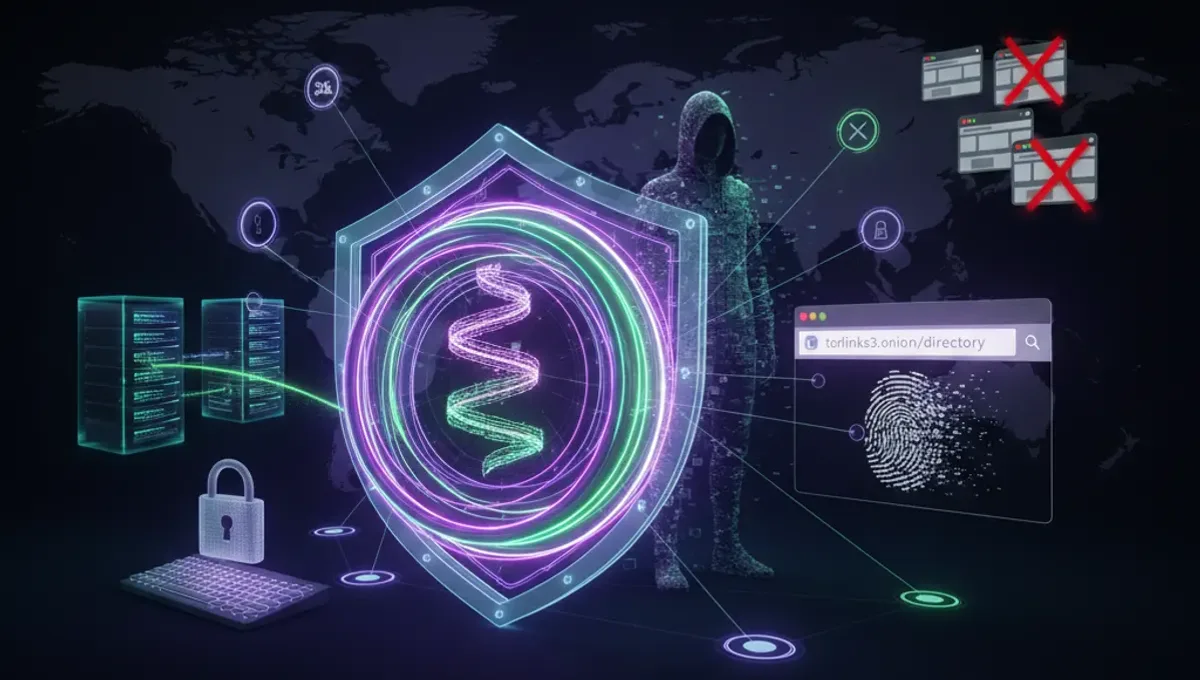
What Is Topic Links 3.0 and How Does It Differ from Topic Links 2.0?
Topic Links 3.0 represents an updated iteration of the Topic Links onion directory, building on the architecture of Topic Links 2.0 with improved indexing methods and address verification. Both versions function as searchable catalogs of .onion services, but v3 addresses—the current Tor standard—offer stronger cryptographic security than v2 addresses used in earlier directory versions. Topic Links 3.0 typically reflects this shift by prioritizing v3 onion addresses in its index. The core difference lies in how entries are verified and maintained; newer versions implement stricter uptime checks and reduce the presence of stale or phishing clone entries. Users accessing Topic Links 3.0 via Tor browser will find categorized listings of onion sites, though the directory's reliability depends on how actively its maintainers verify links and remove dead addresses.
How Do Onion Directories Index and Catalog .Onion Addresses?
Onion directories like Topic Links 3.0 operate by crawling the Tor network, discovering active .onion services, and organizing them into searchable categories. The indexing process involves automated checks for uptime and manual verification of address legitimacy to filter out phishing clones. Each entry typically includes the .onion URL, a brief description, and metadata such as last-checked status. Unlike centralized search engines, onion directories rely on community submissions and crawler bots that periodically test whether listed services respond to requests. The directory maintains a database of these addresses and serves them through its own .onion interface, accessible only via Tor browser. This decentralized approach means no single authority controls the index, but it also means quality varies widely. Directories that implement PGP signature verification and maintain transparent uptime logs tend to be more trustworthy than those with minimal curation.
What Are V3 Onion Addresses and Why Does Topic Links 3.0 Use Them?
V3 onion addresses are the current Tor standard, consisting of 56 characters (compared to v2's 16 characters) and using stronger elliptic-curve cryptography. The Tor Project deprecated v2 addresses in 2021 due to security vulnerabilities, making v3 the only supported format for new onion services. Topic Links 3.0 adopts v3 addressing because it provides improved resistance to brute-force attacks and better forward secrecy. When you access a Topic Links 3.0 directory via Tor browser, the addresses listed should predominantly be v3 format, signaling that the directory maintainers follow current security standards. The longer address format also makes v3 addresses harder to spoof, reducing the likelihood of accidental phishing clone access. If a directory still lists many v2 addresses, it may indicate outdated maintenance or lower security standards. Verifying that a directory uses v3 addresses is one practical way to assess its credibility.
How to Safely Access Topic Links 3.0 and Verify Onion Addresses
Accessing Topic Links 3.0 requires the Tor browser, which routes your traffic through multiple relays and masks your IP address. Follow these steps:
- Download Tor browser from the official Tor Project website on the surface web;
- Install and launch it;
- Wait for connection to the Tor network to complete;
- Enter the Topic Links 3.0 .onion URL in the address bar. Before clicking links from the directory, verify the address format—genuine v3 addresses are 56 characters long and end in .onion. Check for typos or slight variations that indicate phishing clones. If the directory provides PGP signatures or checksums for listed addresses, use them to confirm authenticity. Avoid clicking links immediately after discovering them; instead, cross-reference the address against multiple onion directories or official project pages. Enable Tor browser's security settings to their highest level before browsing. Never maximize your browser window, as this can reveal your screen resolution to exit nodes. Disable JavaScript if the site does not require it, as malicious scripts can compromise anonymity.
Common Phishing Clones and How to Identify Fake Topic Links Directories
Phishing clones of Topic Links 3.0 and other onion directories are common attack vectors. These fake directories mimic the legitimate site's layout and content but redirect users to malicious .onion services or harvest data. To identify a phishing clone:
- Verify the exact .onion address against multiple trusted sources—a single character difference indicates a fake;
- Check for HTTPS certificate warnings or unusual security alerts;
- Look for poor grammar, outdated links, or broken formatting, which often indicate low-effort clones;
- Cross-reference listed services against other reputable directories;
- If available, verify the directory's PGP signature using the maintainer's public key. Legitimate directories typically publish their official .onion address on their surface web pages or in archived documentation. Avoid accessing onion directories through links in forum posts or chat messages without independent verification. If a directory suddenly changes its interface or begins listing obviously fraudulent services, assume it has been compromised and stop using it immediately.
Comparing Tor Browser Access to Topic Links 3.0 with VPN and I2P Alternatives
Tor browser is the standard tool for accessing Topic Links 3.0 and onion services because it provides end-to-end encryption and IP masking through multiple relay hops. VPNs, by contrast, route traffic through a single encrypted tunnel to a VPN provider's server, offering less anonymity than Tor if the provider logs traffic or is compromised. I2P (Invisible Internet Project) is a separate anonymity network with its own hidden services and directories, but it has a smaller user base and fewer onion services indexed compared to Tor. For accessing Topic Links 3.0 specifically, Tor browser is the only viable option since the directory exists as a .onion service. VPNs can complement Tor usage by masking your ISP-visible connection to the Tor network, but they do not replace Tor's anonymity. I2P is useful for different privacy scenarios but does not provide access to Tor onion services. If your goal is to safely browse Topic Links 3.0 and verify onion addresses, Tor browser alone is sufficient; combining it with a VPN adds a layer of obfuscation but introduces additional trust assumptions.
Operational Security (OpSec) Mistakes That Compromise Anonymity When Using Onion Directories
Common OpSec errors when accessing Topic Links 3.0 and onion directories include:
- Maximizing the browser window, which reveals screen resolution to exit nodes;
- Enabling plugins or extensions that bypass Tor routing;
- Logging into personal accounts while using Tor, which deanonymizes your activity;
- Clicking on links from untrusted directories without verification, leading to malicious sites;
- Using the same username across multiple onion services, creating a traceable identity;
- Disabling Tor browser's security features to access sites with poor compatibility;
- Visiting onion directories from a non-Tor connection first, then switching to Tor, which can leak your real IP to logging services. To maintain anonymity: keep Tor browser updated, use a dedicated device or virtual machine if accessing sensitive services, disable JavaScript in security settings, avoid downloading files unless necessary, and never assume a .onion address is legitimate based on its appearance alone. Treat every link from Topic Links 3.0 as potentially compromised until independently verified.
Frequently asked questions
Is Topic Links 3.0 legal to access?
Accessing Topic Links 3.0 itself is legal in most jurisdictions; it is simply a directory of .onion addresses. However, many services listed in onion directories facilitate illegal activities. Accessing the directory through Tor browser is not illegal, but using it to reach illegal marketplaces or services is. Your legal responsibility depends on what you access through the directory, not the directory itself.
How often are Topic Links 3.0 entries updated and verified?
Update frequency depends on the directory maintainers. Reputable directories implement automated uptime checks that run daily or weekly, removing dead links and phishing clones. However, not all entries are verified equally; some may be outdated or unverified. Check the directory's last-updated timestamp or maintenance notes to gauge how actively it is maintained. Directories that publish verification logs or PGP signatures tend to be more reliable.
Can I access Topic Links 3.0 without Tor browser?
No. Topic Links 3.0 is a .onion service, which means it only exists on the Tor network and is inaccessible through standard browsers or VPNs. You must use Tor browser to connect to the Tor network and resolve .onion addresses. Attempting to access it through other means will result in a connection error.
What should I do if I find a dead link in Topic Links 3.0?
Most onion directories accept user reports of dead or phishing links. Look for a contact form, email address, or submission mechanism on the directory's main page. Provide the .onion address, reason for reporting (dead, phishing, etc.), and any supporting evidence. Legitimate directories review reports and remove or update entries accordingly. This helps maintain the directory's quality and reduces phishing clone prevalence.
How do I know if a Topic Links 3.0 mirror is legitimate?
Verify the mirror's .onion address against the official directory's documented address on multiple sources. Check for PGP signatures or checksums published by the maintainers. Legitimate mirrors typically announce themselves on the main directory or in associated documentation. If a mirror appears on a forum or chat without official endorsement, treat it as potentially compromised. Cross-reference any mirror against the primary directory before trusting its listings.