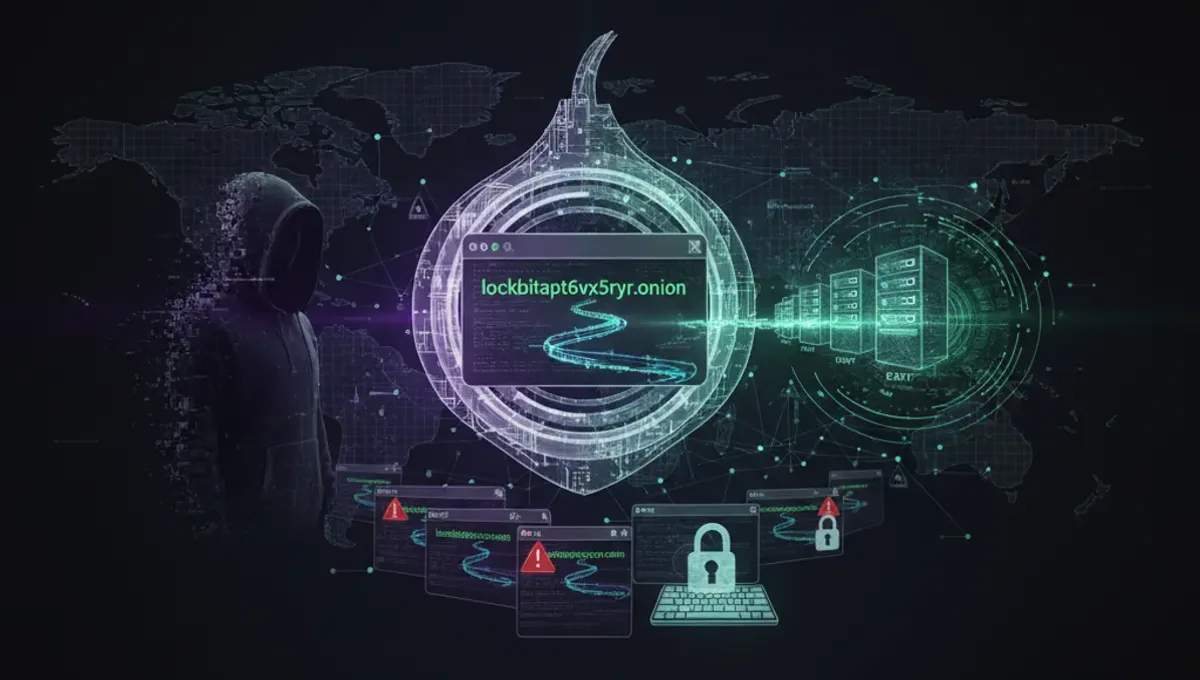
What Are the Top 10 Dark Web Sites?
The top 10 dark web sites include directories, search engines, forums, and services that operate exclusively on the Tor network. These sites of dark web activity range from information repositories and privacy-focused communication platforms to marketplaces and news outlets. Each maintains one or more onion addresses—cryptographic identifiers ending in .onion—and many publish official mirrors to prevent downtime. Unlike clearnet sites, onion dark web sites do not appear in standard search results and require Tor Browser to access. The most established sites publish their addresses on official channels, PGP-signed announcements, or verified social media accounts to prevent users from landing on phishing clones. Uptime varies; some sites maintain 99% availability through redundant infrastructure, while others experience intermittent outages due to network attacks or maintenance.
How Do Onion Addresses and V3 Addresses Work?
An onion address is a cryptographic identifier generated by Tor that routes traffic through multiple encrypted relays before reaching the destination server. V3 addresses, introduced in 2017, are 56-character strings (compared to 16 characters in older v2 addresses) and use stronger encryption standards. When you connect to an onion dark web site, your traffic is encrypted end-to-end, and the server's location remains hidden from your ISP and network observers. The address itself is derived from the server's public key, making it mathematically impossible to forge without controlling the private key. This design means that a site uri dark web cannot be spoofed; if the address changes, it is a different service. V3 addresses are now the standard for new onion services because they resist certain cryptographic attacks. Each onion site maintains its address across mirrors; the address remains constant even if the physical server location changes.
How to Verify Genuine Onion Addresses and Detect Phishing Clones
Phishing clones are fake onion sites designed to steal credentials or distribute malware. To verify a genuine site of dark web origin, follow these steps:
- Check the official website or social media account for a PGP-signed announcement of the correct onion address.
- Compare the address character-by-character—even a single character difference indicates a different site.
- Look for HTTPS certificates or onion-specific security indicators in Tor Browser's address bar.
- Verify the site's PGP key fingerprint against multiple independent sources.
- Check community forums and news outlets for reports of active phishing attempts. Common red flags include newly registered addresses, sites requesting passwords immediately, and addresses that differ by only one or two characters from the legitimate version. The lockbit dark web site, for example, has had multiple clones; the official address is published only through verified channels. Never bookmark onion addresses from untrusted sources, and always re-verify before entering sensitive information.
Step-by-Step Guide to Accessing Top Dark Web Sites Safely
Follow these steps to access an onion dark web site securely:
- Download Tor Browser from the official Tor Project website (torproject.org).
- Verify the GPG signature of the installer to confirm authenticity.
- Install Tor Browser in a dedicated directory and do not modify its settings unless necessary.
- Launch Tor Browser and wait for it to connect to the Tor network (this takes 30–60 seconds).
- Once connected, open a new tab and paste the onion address into the address bar.
- Allow the page to load; initial connections may be slow due to circuit building.
- Do not maximize your browser window, as this can reveal your screen resolution to websites.
- Disable JavaScript in Tor Browser settings to reduce attack surface.
- Use a VPN before connecting to Tor only if your threat model requires it; this adds latency but masks your ISP-visible Tor usage.
- Never open files downloaded from onion sites in your main operating system; use a sandboxed environment or virtual machine. Avoid plugins, extensions, and browser modifications that could compromise anonymity.
Common Mistakes That Compromise Anonymity on Dark Web Sites
Users often make operational security errors that undermine Tor's protection. Reusing usernames across clearnet and onion sites creates a linkable identity; use unique identifiers for each platform. Maximizing the browser window reveals screen resolution, which can be used to fingerprint you across sessions. Enabling plugins like Flash or Java bypasses Tor entirely and leaks your real IP address. Torrenting through Tor is ineffective because BitTorrent clients typically ignore proxy settings and connect directly, exposing your IP. Visiting onion sites while logged into clearnet accounts (Gmail, social media) allows those services to correlate your activity. Typing queries into search bars on onion dark web sites without understanding what data the site collects can expose your interests. Downloading files and opening them immediately in your main OS may execute malware. Enabling full-screen mode or using unusual zoom levels creates a unique fingerprint. Connecting to Tor from a network that blocks it (corporate, school, ISP) without obfuscation (bridges, VPN) flags your Tor usage. The most critical mistake is assuming Tor alone provides anonymity; it requires disciplined operational security and threat modeling.
Comparing Tor, VPN, and I2P for Dark Web Access
Tor, VPN, and I2P each offer different privacy models. Tor routes traffic through three random relays operated by volunteers worldwide, providing strong anonymity but slower speeds. The Tor network is designed to resist traffic analysis and is the only practical method for accessing onion dark web sites. A VPN encrypts traffic between your device and a single server operated by a commercial provider; it hides your activity from your ISP but the VPN provider can see all your traffic. VPNs are faster than Tor but offer weaker anonymity because the provider is a single point of failure. I2P is a decentralized network similar to Tor but optimized for internal communication rather than accessing external sites; it is less suitable for accessing onion dark web sites. Using a VPN before Tor adds a layer of obfuscation but increases latency and introduces a potential weak point if the VPN provider logs traffic. For accessing a site for dark web purposes, Tor Browser is the standard and most secure method. VPNs are useful for hiding Tor usage from your ISP but should not replace Tor itself.
Understanding Onion Mirrors and Uptime Verification
Major onion dark web sites maintain multiple mirrors to ensure availability and distribute load. A mirror is an exact copy of the site hosted on a different server with a different onion address. The official site publishes all legitimate mirror addresses to prevent confusion with phishing clones. Mirrors are useful when the primary address is under attack or experiencing downtime. To verify a mirror's authenticity, check that it is listed on the official site's announcement channel or PGP-signed statement. Uptime monitoring for onion sites is challenging because external monitoring services cannot access them; most sites publish their own status pages. Some onion dark web sites use distributed hosting across multiple jurisdictions to resist takedowns. The lockbit dark web site and other marketplaces have used mirrors extensively to maintain service during law enforcement operations. When accessing a site uri dark web, always confirm the address against the official source before entering credentials or sensitive data. Mirror addresses change periodically, so bookmark the official announcement channel rather than individual addresses.
Frequently asked questions
What is the safest way to access a top dark web site?
Download Tor Browser from torproject.org, verify its GPG signature, and launch it before accessing any onion address. Do not maximize your browser window, disable JavaScript, and never open downloaded files directly in your main OS. Use a unique username for each site and avoid logging into clearnet accounts simultaneously. Connect through a VPN first only if your threat model requires hiding Tor usage from your ISP.
How can I tell if an onion dark web site is legitimate or a phishing clone?
Verify the address against official PGP-signed announcements from the site's operators. Compare the address character-by-character; even one difference indicates a different site. Check community forums and news outlets for reports of active phishing attempts. Never bookmark addresses from untrusted sources, and always re-verify before entering sensitive information or credentials.
Why do top dark web sites use multiple mirrors?
Mirrors distribute traffic load, prevent downtime during attacks, and ensure service availability across multiple jurisdictions. Each mirror has a different onion address but hosts identical content. Official sites publish all legitimate mirror addresses to prevent users from accessing phishing clones. Mirrors are essential for sites that face frequent law enforcement pressure or distributed denial-of-service attacks.
Is using a VPN with Tor necessary to access dark web sites?
A VPN before Tor is optional and depends on your threat model. It hides your Tor usage from your ISP but adds latency and introduces a potential weak point if the VPN provider logs traffic. Tor alone provides strong anonymity for accessing onion dark web sites. Use a VPN only if your ISP blocks Tor or if you need to hide the fact that you are using Tor.
What operational security mistakes should I avoid on dark web sites?
Do not reuse usernames across clearnet and onion platforms. Avoid maximizing your browser window, enabling plugins, or torrenting through Tor. Do not log into clearnet accounts while accessing onion sites. Never download and immediately open files from untrusted sources. Use unique identifiers for each site and maintain disciplined habits to prevent fingerprinting and identity correlation.